
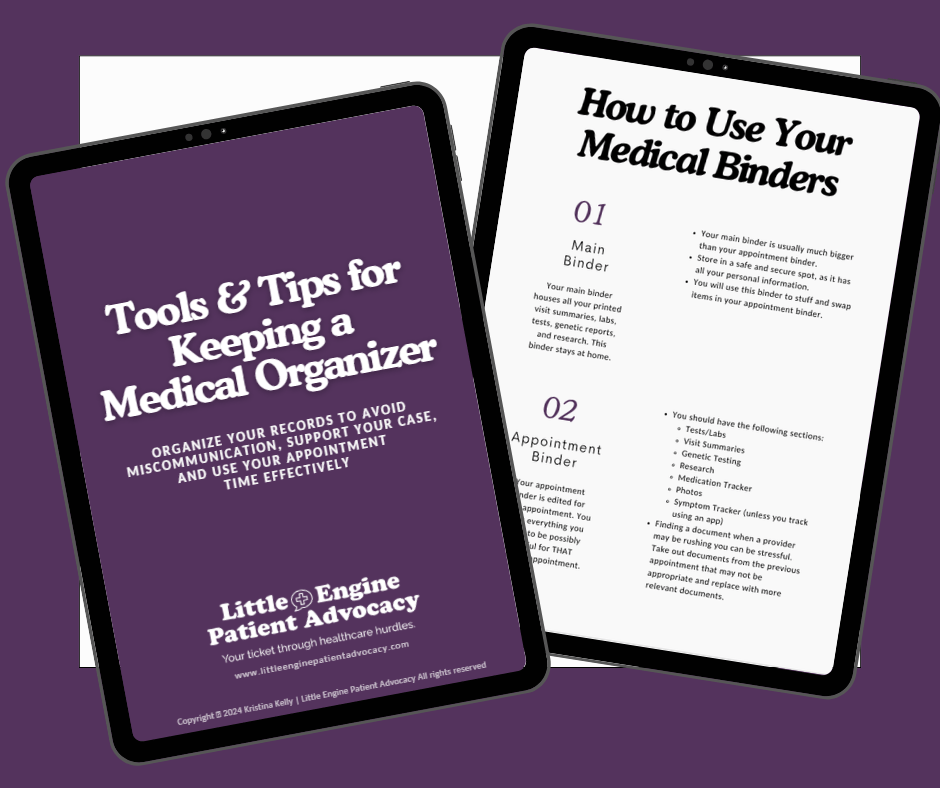
Raise your hand if you’ve ever walked into a doctor’s appointment and immediately blanked on your medication list? How about the date of your last MRI? Or what that “mystery rash” even looked like? Yep, me too. Keeping up with chronic illness in the face of fatigue, brain fog, and dismissive providers requires a strategy. That’s why I made one for medical records.
The Tools & Tips Keeping a Medical Organizer guide was born out of sheer desperation. After years of trying to explain my ever-growing list of symptoms and feeling like doctors were gatekeeping information, I finally sat down and made a medical file folder. I have tweaked it over the year and after numerous compliments from healthcare workers, I created a guide on how you can copy my system. It’s 13 pages of plug-and-play strategies designed to help you track symptoms, meds, labs, appointments, and everything else our chaotic bodies throw at us.
But before you grab it (you totally should), let’s talk about what makes a good medical binder and why this system could save you from your next appointment spiral.
Why You Need a Medical Organizer
When you’re bouncing between specialists, as many of us do, you need receipts. Not the Target kind. The kind that proves you’ve had those symptoms for months, that test wasn’t actually “normal,” and that you’ve tried every first-line treatment.
Doctors love data. A solid binder gives you the quick upper hand. You walk in looking like the CEO of your own health (because you are), and suddenly, you’re not just another “complex case.” You’re the patient who came prepared. BUT there is a right and a wrong way to execute a medical binder.
What to Include in Your Binder
While I won’t give everything away, here are a few key pieces:
- Symptom tracker: Pattern spotting is everything. A flare chart can show what your body is doing between visits.
- Appointment summaries: Think of this as evidence in a court case. Visit summaries, when accurate, are like testimonies from key witnesses.
- Test and lab reports: Keep labs in one place, especially if you’ve had tests done across multiple systems or clinics. Saves you precious time when a provider clicks through lab after lab in MyChart.
Oh, and pro tip: Don’t bring every visit summary and test you ever had in a 6-inch binder. It can convey a different vibe and doesn’t save time when you are trying to find your latest ANA result on the spot. I teach you how to prep your medical folder for each appointment to keep it sleek and smart.
Designed by a Spoonie, For Spoonies
I built this system because I was sick of being dismissed. I needed a way to show up to appointments with my history clear, my questions ready, and my confidence (somewhat) intact. And if you’re someone who struggles with fatigue, brain fog, or executive dysfunction? This guide is for you.
Ready to Get Organized?
For just $10, the Tools & Tips for Keeping a Medical Organizer guide is ready to make your life easier. Print it out or keep it digital. You’ll find it helps not just with doctor visits, but with feeling a little more in control of your health. That alone is worth its weight in printer ink.
Get the guide for just $10 right here.
 Little Engine Patient Advocacy
Leave a comment